

By
Brian Kinsley
Updated:
Listen to this article: The First 72 Hours After a Car Accident in Alabama — a narrated guide covering what to do in the first 72 hours of a car accident in Alabama. 26 minutes.
In the first 72 hours after a car accident in Alabama, you should check for injuries, call 911, document the scene, seek medical evaluation within 24 to 48 hours, notify your insurance company with basic facts only, and avoid giving a recorded statement to the other driver’s insurer. Because Alabama follows a pure contributory negligence rule — where even 1% fault can bar you from recovering any damages — what you say, when you see a doctor, and how you handle early insurance contact are more consequential here than in almost any other state. This guide walks through each step based on Alabama law.
If you’re reading this right after a crash, take a breath.
No one really tells you what to do after a car accident. You call the police, grab your insurance from the glovebox, and exchange information. But as soon as someone hits you, you’re suddenly at a disadvantage—a newcomer navigating a system designed for the insurance companies. Standing on the side of the road, still shaken and uncertain, you realize just how unprepared you are for what comes next.
Who do you ask for help? Your family and friends? Your phone? Your insurance agent? As cars rush by, fear and adrenaline take over as you try to solve urgent problems: Can my car be fixed? How am I going to get to work? Who’s going to pick up my kids?
Do I really need medical attention, or am I just feeling shaken up from the crash? If I ask for help, will people think I’m being dramatic? Am I overreacting—or missing something serious? Is the other driver blaming me? What am I supposed to do next?
It’s normal to feel overwhelmed. Calls from insurance adjusters, questions from police at the scene, and dealing with claims, repairs, and tow trucks can all add to your stress. If you feel lost or anxious, you’re not alone.
The first three days after a car accident can shape the entire course of your personal injury claim. In Alabama, where contributory negligence can prevent recovery entirely, early decisions matter. What you say, when you see a doctor, and how you handle the insurance company can all shape how your claim is evaluated. This guide walks through each of those questions one at a time based on Alabama’s laws and insurance rules, giving you practical answers for the first 72 hours after a car accident.
After a car accident in Alabama, the most important steps are to check for injuries, call the police, document the scene, seek medical evaluation within 24 to 48 hours, and be careful about what you say to insurance companies. Alabama’s contributory negligence rule makes these early decisions more consequential than in most states.
What Should I Do Right After a Car Accident?
Right after a car accident, check yourself and your passengers for injuries. Call 911 for emergency help. If it’s safe, move to a secure spot away from traffic. Exchange information with the other driver. Exchange information with the other driver, and document everything—take photos of the cars, road conditions, license plates, and any visible injuries. Do not admit fault, say you are fine, or downplay how you feel. When speaking with law enforcement, focus on the facts and stay calm.
Check for injuries: Your safety—and that of your passengers—comes first. Before doing anything else, make sure no one is seriously hurt.
Call 911: Even if injuries seem minor, it’s important to call for emergency help so that medical professionals and law enforcement can respond.
Move to safety: If your car is drivable and it’s safe to do so, moving out of the flow of traffic can help prevent further accidents or injuries.
Exchange information: Get the other driver’s contact and insurance details. This is necessary for any future insurance claims.
Document everything: Take photos of the vehicles, the scene (including road conditions and license plates), and any injuries. These photos can be crucial for insurance or legal purposes.
Don’t admit fault or minimize your condition: Avoid saying the accident was your fault or that you’re “fine,” even if you feel okay. Injuries and liability can be assessed later.
Cooperate with law enforcement and stick to the facts: When the police arrive, answer their questions calmly and honestly, but don’t speculate or guess.
Be Careful What You Say at the Scene
Immediately after an accident, it’s common to say things out of shock or politeness without realizing the potential consequences.
Simple statements like:
- “I didn’t even see you.”
- “It was probably my fault.”
- “I’m okay.”
can end up in official reports or be repeated by witnesses later.
In Alabama, even seemingly harmless admissions may be used as evidence of contributory negligence, which can jeopardize your ability to recover damages. Instead, stay calm, exchange only the necessary information, and provide law enforcement with factual answers without speculating or accepting blame.
Document the Scene If You Are Able
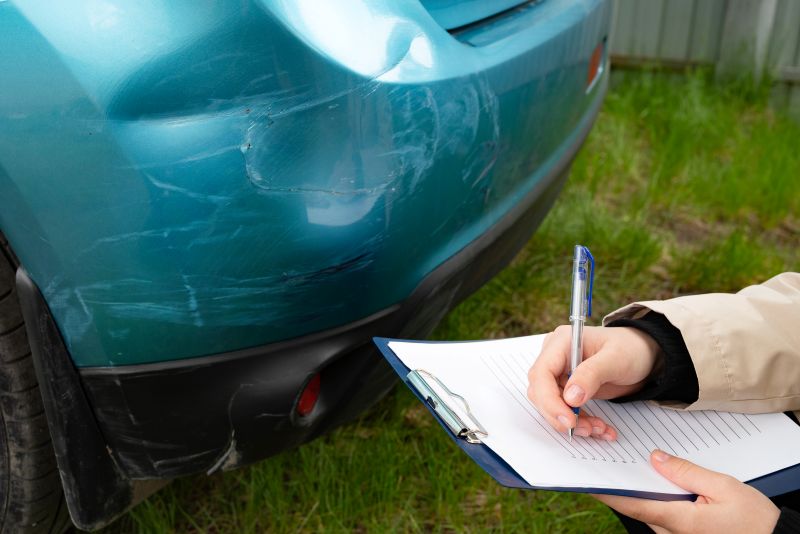
If it is safe to do so, thoroughly document the accident scene by taking clear, comprehensive photographs from multiple angles. Focus on capturing the following details:
- Vehicle Positions: Overall position of all vehicles involved, including their final resting places after the collision
- Damage Overview: Close-up and wide shots of vehicle damage, showing both major and minor impacts
- Identification Details: All license plates, registration stickers, and distinguishing vehicle features
- Road Conditions: Road conditions such as wet or icy pavement, potholes, oil spills, gravel, or other hazards
- Traffic Controls: Traffic signs, signals, and markings near the accident site
- Surface Evidence: Skid marks, tire tracks, broken glass, and debris on the roadway
- Injury Photos: Any visible injuries to yourself, your passengers, or others involved, while respecting privacy and dignity
- Scene Context: Surrounding area, including weather, lighting, and any obstructions that may have contributed to the accident
Take photos from different perspectives (eye level, high angles, and close-ups) and at varying distances. If possible, include time stamps or use your phone’s location data to help verify when and where the images were taken.
Additionally, talk to anyone who may have witnessed the accident. Politely ask for their names, phone numbers, and a brief description of what they saw. Witness statements and contact information can be invaluable if there are conflicting accounts of what happened.
Detailed documentation after a crash often becomes critical evidence if liability is later disputed, helping protect your claim and establish the facts.
Report the Accident Properly
After an accident, reporting the incident accurately is crucial for both legal and insurance reasons. Here are steps and tips to ensure your report is complete and protects your interests:
- When speaking with the officer, provide factual, concise information. Avoid speculating about fault or the cause of the accident.
- Always call the police, even for minor accidents. In Alabama, a police report provides an official record that is often required by insurance companies and may be critical if liability is disputed.
- Carefully check that your name, contact information, vehicle details, and a summary of the events are recorded correctly in the accident report. Mistakes or missing information can cause delays or complications later.
- If you notice any errors or omissions in the report after it’s filed, contact the responding law enforcement agency as soon as possible to request corrections or amendments. Promptly addressing inaccuracies helps you avoid future disputes.
- Ask for the police report number and instructions on how to obtain a copy. Review it for accuracy as soon as possible.
- Remember, insurance companies will scrutinize the accident report closely. Details such as statements made at the scene, listed injuries, and the officer’s observations can all affect your claim.
- If you believe the report is incomplete or unfair, you may be able to submit a written statement or supplement to the agency.
You don’t have to be perfect; just be honest and double-check the police report for mistakes. Law enforcement handles the official accident report. Make sure your name and details are correct. If you later discover inaccuracies, address them promptly.
Making sure the accident report is correct protects you from future headaches. If your information is accurate, your insurance claim is less likely to be delayed or denied, and you’ll be better prepared if there are questions later. Getting this step right can save you time, money, and stress.
What Should You Do the Night After a Car Accident?
The evening after a car accident, write down everything you remember while it is fresh. Start a file for all accident-related documents. Do not post about the wreck on social media. If people ask about it online, respond privately and avoid discussing details, injuries, or fault publicly.
Avoid Social Media Posts
During the first 72 hours after an accident, emotions run high and you may feel the urge to share your experience online. However, posting on social media can have unintended consequences for your insurance claim or legal case.
Avoid the following:
- Speculating about who was at fault
- Sharing photos or videos of the accident scene
- Making casual comments about your injuries or how you feel
- Joking about the incident or downplaying what happened
Insurance companies and opposing attorneys routinely monitor social media profiles. Even well-intentioned posts can be misinterpreted or used against you to question your credibility, dispute the severity of your injuries, or argue about fault. It’s safest to avoid posting anything related to the accident until your case is resolved.
Preserve All Documentation
Begin organizing all your accident-related paperwork as soon as possible. Create a dedicated folder—either physical or digital—to store:
- Medical discharge paperwork
- Prescriptions and pharmacy receipts
- Appointment confirmations and follow-up instructions
- Auto repair estimates and invoices
- Tow truck receipts
- Rental car documentation
- Any correspondence from insurance companies, including emails and letters
Accident claims can take months, or even longer, to resolve. Keeping thorough records from day one ensures you have quick access to essential information if questions arise or you need to verify details later. Well-organized documentation not only helps prevent important evidence from slipping through the cracks, but it also makes communicating with insurance companies and legal professionals much smoother, minimizing delays and protecting your claim.
What Should You Do After a Car Accident If You Are Injured?
If you are injured in a car accident, seek medical evaluation as soon as possible—even if you feel “fine” or your symptoms seem minor. Adrenaline and shock can mask pain for hours or even days, leading you to underestimate injuries like whiplash, concussions, or internal trauma. Visit an emergency room, urgent care, or your primary care provider within 24 to 48 hours. Be thorough when describing your symptoms—mention everything, even if it seems insignificant. Early medical records establish a clear link between your injuries and the accident, protecting both your health and your legal claim.
Seek Medical Evaluation — Even If You Feel “Fine”
Adrenaline can hide pain. Many injuries, such as neck strain, back injuries, concussions, and soft tissue damage, may not show up for hours or days.
If you experience any of the following symptoms:
- Neck or back pain
- Headache
- Dizziness
- Numbness or tingling
- Chest pain
- Persistent soreness
You need to decide on your next step based on how you feel:
– If you are in significant pain (for example, severe pain, difficulty moving, trouble breathing, or symptoms that are worsening), go to the emergency room (ER) today.
– If you are sore but still able to function (mild to moderate symptoms), visit urgent care or your primary care provider (PCP) within 24–48 hours.
– If you feel completely fine, you should still schedule a baseline evaluation with your PCP or an urgent care clinic within 72 hours, as some injuries can be delayed or subtle.
Prompt medical evaluation protects both your health and your legal claim. Early medical records help link your symptoms to the accident. Waiting weeks before seeking care can create unnecessary legal complications.
Follow the Doctor’s Instructions
If a provider recommends any of the following, take them seriously:
- Follow-up appointments
- Imaging (such as X-rays or MRI)
- Physical therapy
- Medication
Missed follow-ups or ignored instructions create gaps in your medical record that insurers will use to argue your injuries were minor or not a result of the accident. This isn’t just bureaucracy—it’s the framework insurers rely on to evaluate claims and limit payouts. Consistent treatment is critical to demonstrate the true impact of your injuries.
Consistency in treatment matters. If you are worried about the cost of care, don’t let that stop you from seeking medical evaluation. Many people hesitate because of deductibles or out-of-pocket costs, but accident-related medical bills may be covered by the at-fault driver’s insurance, your own medical payments coverage, or uninsured motorist (UM) coverage. In some cases, treatment can be arranged under a lien agreement, where payment is deferred until your claim resolves. Always ask about these options—cost should not prevent you from getting checked out after an accident.
Schedule a
Free Consultation
How Should You Handle the Insurance Company After a Car Accident?
After a car accident, notify your own insurance company with basic facts: date, location, and the other driver’s information. Do not speculate about fault. If the other driver’s insurance company calls and asks for a recorded statement, you are not required to give one. Adjusters begin evaluating your claim within days, so early statements and documentation shape how your case is categorized.
Notify Your Insurance Company
Most policies require timely notice of an accident. This means you should reach out to your insurance company as soon as possible after the crash, even if you are still processing what happened. Let them know the basics—when and where the accident occurred, and who was involved. If you wait too long, you may risk complications with your claim.
When you notify your insurer, provide only basic factual information. Avoid speculating about who was at fault or guessing what happened. Stick to the facts as you know them. Do not provide a recorded statement to the at-fault driver’s insurance company without first understanding the implications—recorded statements can be used against you, and it is usually best to have guidance from your own insurer or an attorney before agreeing to one.
Even within the first few days, adjusters may request recorded interviews or additional information. Do not feel pressured to rush through this process. If you are unsure, it is okay to ask for time to review your notes or consult with someone you trust before responding. Taking a careful approach can help protect your interests and keep your claim on track.
What to Do If the Other Driver’s Insurance Company Calls
If the other driver’s insurance company contacts you and asks for a recorded statement, remember you are not required to give one. In fact, it is generally wise to decline providing a recorded statement without first consulting your own insurance company or an attorney. The other driver’s insurer is focused on protecting its own interests, and anything you say could be used against you to limit or deny your claim.
If you receive a call from the other driver’s insurance adjuster, you can politely decline to give a statement. Here are some suggested responses:
- “I am not comfortable giving a recorded statement at this time.”
- “I am still gathering information and do not wish to make a statement now.”
- “I prefer to speak with my own insurance company or an attorney before providing any information.”
- “Please contact my insurance company directly.”
Be courteous but firm. You do not have to answer their questions, and you do not have to agree to any recording. It is always your right to say no.
Understand That Insurance Companies Begin Evaluating Immediately
Within days of the accident, insurers are already assessing:
- Liability
- Property damage
- Injury exposure
- Contributory negligence defenses
Early recorded statements, inconsistent documentation, or admissions at the scene can influence how your claim is categorized internally. The first 72 hours often shape the narrative of the case.
What If You Miss Work After a Car Accident?
If you miss work because of a car accident, start tracking it immediately. Record every date missed, every hour reduced, and any written work restrictions from your doctor. Keep pay stubs from before and after the accident. If you are self-employed, document canceled appointments, lost contracts, and reduced productivity. Lost wages are part of damages in personal injury claims, and proving them later without records is difficult.
Track Missed Work and Lost Wages
If your injuries prevent you from working after the accident—or if you return to work but are still experiencing pain or limitations—it’s essential to document every aspect of your missed work and changes in your ability to earn income. This is especially important in Alabama, where detailed records can make or break your personal injury claim.
Decision Point: Did you go back to work while still hurting?
- If yes, document any partial missed days, reduced work hours, modified duties, or times when you had to leave early for medical appointments.
- Even if you “worked through the pain,” you should record any physical limitations, struggles to keep up, or tasks you could no longer perform. Working with pain, slower productivity, or needing help to complete your job all count as damages.
Start by notifying your employer as soon as possible about your absence or any changes in your work capacity. Request written verification of all time missed and any work restrictions. Maintain a dedicated file—either physical or digital—where you keep all documentation related to lost wages and work limitations.
Key records to preserve include:
- Dates you were unable to work, including partial missed days or instances when you had to leave early for medical appointments.
- Number of hours reduced each day or week, especially if you returned on a limited schedule or with modified duties.
- Employer notes or letters verifying your absence, work restrictions, or changes in your responsibilities resulting from your injuries.
- Doctor’s notes prescribing time off or outlining work limitations.
- Pay stubs and direct deposit records from before and after the accident, highlighting any reduction in income.
- Written documentation of any lost bonuses, commissions, or overtime opportunities affected by the accident.
If you are self-employed, track canceled appointments, lost contracts, and any reduction in productivity or business income, using invoices, client communications, and financial statements as evidence. This level of detail is rarely covered by generic guides, but it’s critical for proving your losses in Alabama courts.
Keep a log of every instance you missed work for accident-related reasons, even if it was just a few hours, or you pushed through despite pain. Thorough records help your attorney, insurance company, or the court accurately calculate your lost wages and work limitations. Without documentation, you may struggle to recover the full amount you are owed as part of your personal injury claim.
What Should You Do After a Single-Car Accident?
Single-vehicle accidents are especially common on rural Alabama roads. Whether you hit a deer, hydroplane on Highway 278, or run off the road to avoid another driver, you may face insurance questions that aren’t obvious. Even when no one else is involved, key steps still matter: call the police, get a medical evaluation, and document the scene. A police report is still important, and seeing a doctor quickly can protect both your health and your insurance claim. Just because there isn’t another driver does not mean there’s no insurance coverage—your collision, medical payments, or even uninsured/underinsured motorist coverage might still apply depending on the circumstances. If road conditions, construction, or debris from another vehicle played a role, you may also have a claim against a third party.
Does It Matter Which Insurance Company Is Involved?
What does vary from claim to claim is how quickly the other driver’s insurance company—whether that’s GEICO, State Farm, USAA, Allstate, Progressive, Liberty Mutual, Farmers, Nationwide, or AAA—reaches out to request a recorded statement, how aggressively they push for an early settlement, and the internal timelines they use to evaluate your claim.
Some adjusters move fast, while others may take more time to review your file. That said, the fundamentals do not change based on the carrier. What matters most is understanding your own policy—your liability limits, medical payments (med pay), and uninsured/underinsured motorist (UM/UIM) coverage. Knowing these details protects you far more than knowing the logo on the other driver’s insurance card. Regardless of the company involved, careful documentation, prompt medical evaluation, and a clear understanding of your own coverage are what truly keep your interests protected.
Does the State Where Your Accident Happened Matter?
Yes. The state where your accident happened determines which laws govern your claim. The differences that matter most are:
- Comparative fault vs. contributory negligence: Most states use comparative fault, allowing you to recover damages even if you are partly at fault. Alabama, however, follows pure contributory negligence. If you are found even 1% at fault, you cannot recover any damages.
- Statutes of limitations: The deadline for filing a claim varies by state. In Alabama, you generally have two years from the date of the accident to file a personal injury lawsuit, but other states may allow more or less time.
If your accident happened in Alabama, this guide applies. If it happened elsewhere, seek state-specific guidance, as the rules may differ significantly.
Why Do the First 72 Hours Matter So Much in Alabama?
Most states use comparative fault, which means your recovery after an accident is simply reduced by your percentage of responsibility. Alabama, however, is different—and far more unforgiving. Alabama follows a pure contributory negligence rule: if you are found even 1% at fault, you can be completely barred from recovering any damages. That’s why this guide is Alabama-specific, and why the steps you take in the first 72 hours matter so much. Photo documentation, careful statements, and immediate action are not just helpful—they are essential. Saying something as simple as “it was probably my fault” or failing to preserve evidence could close the door on your entire claim. In Alabama, the first 72 hours are not just about recovery—they are about preserving your right to recover at all.
Frequently Asked Questions About the First 72 Hours
Here are common questions people ask about what to do, how to talk to doctors, and what to expect from insurance in the critical 72 hours following an Alabama car accident.
Answer: Seek evaluation as soon as symptoms arise. Delays do not automatically defeat a claim, but documentation becomes more important. Add: the sooner you create a medical record connecting symptoms to the accident, the stronger the foundation.
Answer: Property damage claims are separate from injury claims. Be careful not to sign broad releases that may affect bodily injury rights. Add: read release language carefully. If it closes more than the vehicle claim, stop and understand what you are signing.
Answer: Delayed soreness is common. Schedule an evaluation promptly and inform the provider that symptoms began after the accident.
In Alabama, contributory negligence can bar recovery if you are found even slightly at fault. This makes the early narrative critical. How fault is documented in the police report, medical records, and insurance statements all influence the analysis.
Not every accident requires legal representation. But when injuries develop, liability is disputed, or the insurance company pushes for a quick settlement, understanding your rights prevents unintended consequences. A free case evaluation helps you decide.
Uninsured motorist coverage under your own policy may apply. This is one of the reasons understanding your own coverage matters before you ever need it.
Alabama’s statute of limitations for personal injury is generally two years. But the quality of evidence, medical documentation, and liability narrative are all shaped in the first weeks, not the last months.
Free Case Evaluation
Schedule a
Free Consultation
Disclaimer
This article is provided for informational purposes only and does not constitute legal advice. Reading this material does not create an attorney-client relationship. Each case must be evaluated individually.